
Jiaogulan Herb of Immortality Benefits Science and History

A climbing vine with small green leaves became famous because people noticed something unusual: in regions where it was brewed as a daily tea, older adults appeared to stay active for longer.
That plant is jiaogulan, also known as Gynostemma pentaphyllum. It grows naturally across parts of Thailand, China, Vietnam, Laos, Korea, Japan, and other areas of Southeast and East Asia. In some places, it has been treated as an everyday mountain tea. In others, it became something more legendary.
In China, jiaogulan earned the nickname “the herb of immortality.” The name sounds dramatic, but it points to a real history of interest in the plant’s connection to long life, resilience, and healthy aging.
Modern research has not proven that any herb can grant immortality. Still, jiaogulan stands out because of its unusual plant compounds, long traditional use, antioxidant activity, and reputation as one of the most interesting adaptogenic herbs in the world.
This article is for informational purposes only and does not replace medical advice, diagnosis, or treatment.

What is jiaogulan?
Jiaogulan is a perennial climbing vine in the cucumber family, Cucurbitaceae. Its leaves are usually harvested, dried, and steeped as tea. The flavor can be slightly sweet, grassy, and earthy, with a mild bitterness depending on how it is processed.
The plant is often associated with China, but it is also native to Thailand and parts of Southeast Asia. In these warm, humid regions, it grows well in forests, mountain slopes, and shaded areas where it can climb over nearby vegetation.
Jiaogulan has several common names, including:
Southern ginseng
Five-leaf ginseng
Miracle grass
Immortality herb
Sweet tea vine
Those names can be confusing because jiaogulan is not true ginseng. True ginseng comes from the Panax genus. Jiaogulan belongs to a different plant family, yet it contains compounds that resemble some of the active compounds found in ginseng. That similarity helped shape its modern reputation.
The most studied compounds in jiaogulan are called saponins, especially a group known as gypenosides. These compounds are one reason researchers became interested in the plant’s potential effects on stress response, metabolism, inflammation, and aging.
Why China calls it the herb of immortality
Jiaogulan’s famous nickname comes from traditional use in southern China. In rural mountain communities, people drank it as a daily tea, often not as a rare medicine but as part of ordinary life.
The herb became especially associated with Guizhou and other southern regions where residents were known for unusual longevity. Local stories connected jiaogulan tea with endurance, good health, and long life. Over time, that connection gave rise to the name “the herb of immortality.”
The phrase should not be taken literally. In traditional herbal culture, names often carry symbolic meaning. “Immortality” suggests vitality, resilience, and the hope of aging well. It reflects the way people used the plant, not a guarantee.
Still, the reputation was strong enough to draw scientific attention in the 20th century. Researchers began asking a practical question: were communities that drank jiaogulan tea experiencing better health by chance, or did the plant itself deserve study?
That question helped move jiaogulan from folk tradition into laboratory and clinical research.
What researchers noticed in the 1960s and 1970s
Scientific interest in jiaogulan grew during the 1960s and 1970s, when researchers in China began looking more closely at regions known for high numbers of long-lived residents.
Reports from that period linked regular jiaogulan tea consumption with lower rates of certain diseases and longer average life expectancy in some communities. These early observations helped raise the plant’s profile and encouraged deeper investigation into its chemistry.
This kind of research was important, but it had limits. Observational findings can show patterns, but they cannot prove that one habit directly caused a health outcome. People in long-lived communities may share many protective factors, such as:
Simple diets built around plants
Daily physical activity
Clean mountain air
Strong social ties
Lower exposure to some modern stressors
Generational tea-drinking habits
Jiaogulan may have been one piece of that larger picture.
Later studies focused more closely on what the plant contains and how its compounds behave in the body. Instead of asking only whether tea drinkers lived longer, researchers began asking how gypenosides and antioxidants might affect biological pathways tied to health.
That shift matters. It moved jiaogulan out of legend and into a more grounded conversation about plant chemistry, stress, and healthy aging.
The compounds that make jiaogulan interesting
Jiaogulan’s health reputation starts with its phytochemistry. The plant contains a wide range of natural compounds, including saponins, flavonoids, polysaccharides, vitamins, minerals, and other plant antioxidants.
The most famous are its saponins.
Jiaogulan contains over 80 saponins
Jiaogulan is widely reported to contain more than 80 saponins, many of them classified as gypenosides. Some sources describe even higher numbers as new compounds are identified.
Saponins are naturally occurring compounds found in many medicinal plants. They often have a bitter taste and can interact with cell membranes, immune pathways, and metabolic processes. In jiaogulan, gypenosides are the main reason the herb is often compared with ginseng.
Ginseng contains ginsenosides. Jiaogulan contains gypenosides. The names are different, but some of their structures and possible effects are similar enough that jiaogulan gained the nickname “southern ginseng.”
Researchers have studied gypenosides for possible roles in:
Supporting a balanced stress response
Protecting cells from oxidative damage
Supporting healthy inflammatory responses
Influencing lipid and glucose metabolism
Supporting cardiovascular health markers
These areas are promising, but they should be understood carefully. Lab studies, animal studies, and small human trials can suggest potential benefits, but they do not make jiaogulan a cure or a substitute for medical care.
Its antioxidants help explain its aging reputation
Oxidative stress happens when unstable molecules, often called free radicals, outpace the body’s antioxidant defenses. Over time, oxidative stress can damage cells and is linked with aging and many chronic health concerns.
Jiaogulan contains antioxidant compounds that may help neutralize free radicals. This is one reason it is often discussed in the context of longevity. The idea is not that antioxidants stop aging. The better way to think of it is that antioxidant-rich plants may support the body’s normal repair and defense systems.
Jiaogulan tea fits into the same broad category as green tea, tulsi, schisandra, and other herbs people use to support daily wellness. Its value may come less from a single dramatic effect and more from regular, moderate use as part of a healthy lifestyle.

Why jiaogulan is considered a top adaptogen
Adaptogens are herbs and natural substances that help the body respond to stress and maintain balance. The concept comes from herbal traditions and was later explored through modern research.
A plant is generally considered adaptogenic when it supports resilience without pushing the body too far in one direction. That is why adaptogens are often described as balancing rather than stimulating.
Jiaogulan is often ranked among top adaptogens because it appears to support several stress-related systems at once. Traditional use and modern research both point to its potential role in helping the body cope with physical, metabolic, and environmental stress.
People commonly use jiaogulan to support:
Steady energy
Healthy aging
Exercise recovery
Metabolic wellness
Cardiovascular support
A calmer stress response
The energy effect is one of the most interesting parts of its reputation. Jiaogulan is not a caffeine herb. Its tea is usually caffeine-free. Many people describe its effects as smooth and steady rather than sharp or stimulating.
That makes it different from coffee, yerba mate, or black tea. For people who are sensitive to caffeine, jiaogulan may feel gentler. Still, individual responses vary.
Jiaogulan and heart health
One reason jiaogulan drew attention in longevity research was its possible connection to cardiovascular health. Healthy aging depends heavily on the heart and blood vessels, so herbs that support circulation and metabolic balance often become part of longevity traditions.
Research has explored jiaogulan for its possible effects on cholesterol, triglycerides, blood pressure, and blood sugar regulation. Some studies suggest that gypenosides may help support healthier lipid and glucose metabolism.
This does not mean jiaogulan should replace medication or medical treatment. People taking medication for blood pressure, cholesterol, diabetes, or blood thinning should be especially careful and speak with a qualified health professional before using concentrated extracts.
As a tea, jiaogulan is usually approached as a gentle daily tonic. Extracts are more concentrated and may have stronger effects.
Jiaogulan as a daily tea
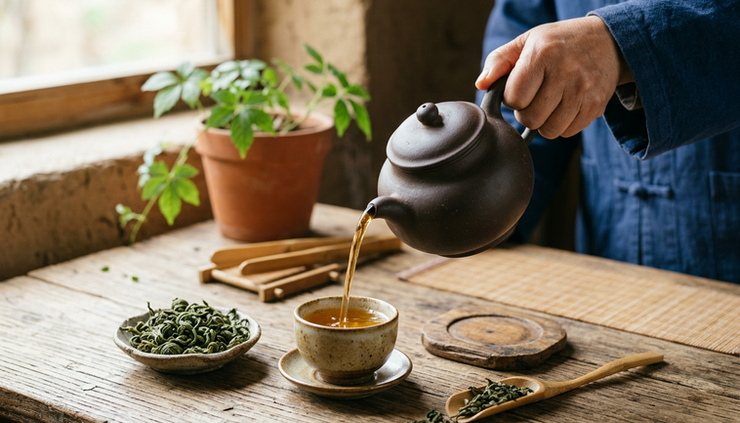
The traditional way to use jiaogulan is simple: steep the dried leaves in hot water and drink it as tea.
A typical cup has a light green or golden color. The flavor is often described as slightly sweet at first, followed by a green, herbal finish. Some batches taste more bitter, especially if steeped too long.
A simple preparation looks like this:
Use about 1 to 2 teaspoons of dried jiaogulan leaves per cup.
Pour hot water over the leaves.
Steep for 3 to 5 minutes.
Strain and drink plain, or add lemon or honey if desired.
Many people resteep the same leaves once or twice. The second infusion is often smoother.
Jiaogulan can also be found in capsules, powders, tinctures, and extracts. Tea is closest to traditional use, while extracts are more concentrated and should be used with more care.
Safety and who should be cautious
Jiaogulan is generally considered well tolerated by many adults when used as tea in moderate amounts. Still, natural does not always mean risk-free.
Some people should use extra caution or avoid it unless guided by a health professional, including those who are:
Pregnant or breastfeeding
Taking blood thinners
Taking medication for diabetes
Taking medication for blood pressure
Scheduled for surgery
Managing an autoimmune condition
Sensitive to herbs in the cucumber family
Possible side effects may include digestive upset, nausea, or changes in energy levels. Concentrated extracts may be more likely to cause noticeable effects than tea.
Quality also matters. Buy herbs from companies that test for contaminants such as heavy metals, pesticides, and microbes. This is especially important for imported botanicals.

How jiaogulan fits into a longevity lifestyle
The most grounded way to view jiaogulan is as a supportive herb, not a miracle. Its history is fascinating because it sits at the meeting point of folk wisdom, regional longevity patterns, and modern plant science.
The old stories from China give jiaogulan its mystique. The research from the 1960s and 1970s gave scientists a reason to look closer. Its saponins, antioxidants, and adaptogenic qualities explain why it remains popular with people interested in herbal wellness.
Still, long life rarely comes from one plant. The communities that made jiaogulan famous likely benefited from many habits working together: movement, simple food, fresh air, social connection, and daily rituals that reduced stress.
That may be the real lesson of the “herb of immortality.” Jiaogulan is not a shortcut around healthy living. It is a plant that may fit beautifully inside it.
A daily cup of jiaogulan tea can be a small ritual with a long history behind it. Its benefits are still being studied, but its place in herbal tradition is already secure: a humble vine, a soothing tea, and one of Asia’s most intriguing plants for resilience and healthy aging.


Comments